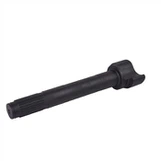
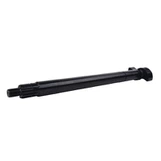
Hey there! As a supplier of 1094 Brake Camshafts, I often get asked about the heat-treatment processes for these parts. Heat treatment is a crucial step in the manufacturing of brake camshafts, as it significantly affects their performance, durability, and overall quality. In this blog post, I'll walk you through the main heat-treatment processes used for 1094 Brake Camshafts.
Why Heat Treatment Matters
Before we dive into the specific processes, let's talk about why heat treatment is so important for 1094 Brake Camshafts. The 1094 steel is a high-carbon steel that offers good strength and wear resistance. However, to make the camshafts even more reliable and long-lasting, we need to modify their microstructure through heat treatment. This can enhance properties like hardness, toughness, and fatigue resistance, which are essential for the demanding conditions that brake camshafts face in vehicles.
Annealing
The first heat-treatment process we use is annealing. Annealing is a heat-treatment method that involves heating the 1094 steel to a specific temperature and then cooling it slowly. This process helps to relieve internal stresses that may have been introduced during the forging or machining of the camshafts. It also softens the steel, making it easier to machine in subsequent steps.
During annealing, we heat the camshafts to a temperature just above the critical range of the 1094 steel, which is around 723°C (1333°F). We hold the temperature for a certain period to allow the microstructure to transform evenly. Then, we cool the camshafts very slowly, usually in the furnace itself. This slow cooling rate promotes the formation of a fine-grained, homogeneous microstructure that is less prone to cracking and distortion.
Normalizing
After annealing, we perform normalizing. Normalizing is similar to annealing in that it involves heating the steel to a high temperature, but the cooling rate is faster. We heat the 1094 Brake Camshafts to a temperature above the critical range, typically around 850 - 900°C (1562 - 1652°F). Once the camshafts reach this temperature, we hold them there for a short time to ensure uniform heating.
Then, we remove the camshafts from the furnace and let them cool in still air. This relatively fast cooling rate produces a finer grain structure compared to annealing, which results in improved strength and hardness. Normalizing also helps to refine the microstructure and reduce any inhomogeneities that may have been present in the steel.
Hardening
Hardening is a key heat-treatment process for the 1094 Brake Camshafts. The goal of hardening is to increase the hardness of the camshafts so that they can withstand the high contact pressures and wear that occur during the operation of the braking system.
To harden the camshafts, we heat them to a temperature in the austenitic range, which is usually around 800 - 850°C (1472 - 1562°F). Once the camshafts are at the correct temperature, we quench them rapidly in a suitable quenching medium, such as oil or water. This rapid cooling causes the austenite to transform into martensite, a very hard and brittle phase.
However, martensite is too brittle to be used in its as-quenched state. So, we need to follow up hardening with another process called tempering.
Tempering
Tempering is performed after hardening to reduce the brittleness of the martensite and improve the toughness of the camshafts. During tempering, we heat the hardened camshafts to a temperature below the critical range, typically between 150 - 650°C (302 - 1202°F), depending on the desired properties.


We hold the camshafts at the tempering temperature for a specific period to allow the martensite to transform into a more stable and ductile microstructure called tempered martensite. The tempering process also relieves any residual stresses that were introduced during quenching. By carefully controlling the tempering temperature and time, we can achieve the right balance between hardness and toughness for the 1094 Brake Camshafts.
Surface Hardening
In addition to the bulk heat-treatment processes mentioned above, we also use surface hardening techniques for the 1094 Brake Camshafts. Surface hardening is important because the surfaces of the camshafts are the ones that come into direct contact with other components in the braking system, such as the brake shoes.
One common surface hardening method we use is induction hardening. Induction hardening involves heating the surface of the camshafts using an induction coil. The high-frequency alternating current in the coil creates a magnetic field that induces eddy currents in the surface of the camshaft. These eddy currents generate heat, which rapidly heats the surface layer to a high temperature.
After the surface is heated, we quench it to harden the surface layer while keeping the core of the camshaft relatively soft and tough. This combination of a hard surface and a tough core provides excellent wear resistance and fatigue resistance for the camshafts.
Comparison with Other Brake Camshafts
If you're familiar with other types of brake camshafts, like the 457 Brake Camshaft or the Brake Camshaft Of BENZ Heavy Truck, you may wonder how the heat-treatment processes for the 1094 Brake Camshafts differ. While the basic principles of heat treatment are similar for all types of brake camshafts, the specific temperatures, times, and quenching media may vary depending on the material and the design requirements.
For example, the 457 Brake Camshaft may be made of a different steel alloy, and its heat-treatment process may be optimized to achieve different levels of hardness and toughness. Similarly, the Brake Camshaft Of BENZ Heavy Truck may have specific requirements for high-temperature performance and corrosion resistance, which would influence the heat-treatment parameters.
Another interesting product is the 712W50301-0112/712W50301-0113 SINOTRUK CNHTC MCP16 Rear Axle Brake Shaft. This brake shaft is designed for specific heavy-duty applications, and its heat-treatment process is tailored to meet the demanding conditions of these vehicles.
Conclusion
In conclusion, the heat-treatment processes for the 1094 Brake Camshafts are crucial for ensuring their performance and durability. By using a combination of annealing, normalizing, hardening, tempering, and surface hardening techniques, we can produce camshafts that have the right balance of hardness, toughness, and wear resistance.
If you're in the market for high-quality 1094 Brake Camshafts, I'd love to have a chat with you. Whether you're a vehicle manufacturer, a parts distributor, or someone looking to replace a worn-out camshaft, I can provide you with the best products and services. Don't hesitate to reach out for more information and to start a procurement discussion.
References
- ASM Handbook Volume 4: Heat Treating. ASM International.
- Metals Handbook: Properties and Selection: Irons, Steels, and High-Performance Alloys. ASM International.