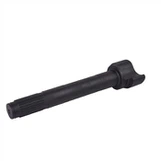
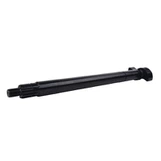
Hey there! As a supplier of Brake Camshaft For BPW, I often get asked about how to check the integrity of these crucial components. So, I thought I'd share some tips and tricks that I've picked up over the years.
First things first, let's talk about why it's so important to check the integrity of a brake camshaft. The brake camshaft is a key part of your vehicle's braking system. It converts the linear motion of the brake actuator into rotational motion, which then applies the brakes. If the camshaft is damaged or worn out, it can lead to poor braking performance, uneven brake wear, and even brake failure in extreme cases. So, regular checks are a must to keep you and your vehicle safe on the road.
Visual Inspection
The first step in checking the integrity of a brake camshaft is a visual inspection. This is a simple but effective way to spot any obvious signs of damage or wear. Start by cleaning the camshaft thoroughly to remove any dirt, grease, or debris. This will make it easier to see any cracks, chips, or other defects.
Look for any signs of corrosion on the camshaft. Corrosion can weaken the metal and lead to premature failure. Check the surface of the camshaft for any pitting or scoring. These can be caused by friction or wear and can affect the performance of the camshaft. Also, examine the ends of the camshaft for any signs of damage, such as bent or broken splines.


Measuring the Camshaft
After the visual inspection, the next step is to measure the camshaft. You'll need a micrometer or a caliper for this. Measure the diameter of the camshaft at several points along its length. Compare these measurements to the manufacturer's specifications. If the diameter is outside the acceptable range, it could indicate wear or damage.
Check the lobe height of the camshaft. The lobe height is the distance from the base circle of the cam to the top of the lobe. This measurement is critical for proper brake operation. Use a dial indicator to measure the lobe height. If the lobe height is too low, it can result in reduced brake force.
Checking for Runout
Runout is another important factor to consider when checking the integrity of a brake camshaft. Runout refers to the amount of deviation from a perfect circle as the camshaft rotates. Excessive runout can cause uneven brake wear and poor braking performance.
To check for runout, mount the camshaft in a V-block or a lathe. Use a dial indicator to measure the runout at several points around the camshaft. The runout should be within the manufacturer's specifications. If the runout is too high, the camshaft may need to be replaced.
Inspecting the Bearings
The bearings that support the camshaft also play a crucial role in its performance. Inspect the bearings for any signs of wear or damage. Look for any play or looseness in the bearings. If the bearings are worn or damaged, they can cause the camshaft to vibrate or run out of alignment, which can lead to premature failure.
Check the lubrication of the bearings. Proper lubrication is essential for reducing friction and wear. If the bearings are dry or contaminated, they should be cleaned and lubricated or replaced.
Using Non - Destructive Testing
In some cases, a visual inspection and basic measurements may not be enough to detect internal damage in the camshaft. That's where non - destructive testing (NDT) comes in. NDT methods such as magnetic particle inspection or ultrasonic testing can be used to detect cracks or other internal defects that are not visible to the naked eye.
Magnetic particle inspection involves applying a magnetic field to the camshaft and then applying iron particles. If there is a crack in the camshaft, the magnetic field will cause the iron particles to accumulate at the crack, making it visible. Ultrasonic testing uses high - frequency sound waves to detect internal defects. A transducer sends ultrasonic waves into the camshaft, and any defects will cause the waves to reflect back, which can be detected by the testing equipment.
Importance of Using Quality Brake Camshafts
When it comes to brake camshafts, quality matters. Using a high - quality brake camshaft can ensure better performance, longer service life, and greater safety. At our company, we offer a wide range of brake camshafts, including the Brake Camshaft Rear Axle Left For Mercedes Benz And MAN 81.50301.0113, Good Quality Of Brake Camshaft For Benz Truck, and Meritor Brake Camshaft. These camshafts are made from high - grade materials and are manufactured to strict quality standards.
Conclusion
Checking the integrity of a brake camshaft for BPW is a crucial part of vehicle maintenance. By following these steps, you can ensure that your brake camshaft is in good condition and performing at its best. Regular inspections can help prevent costly repairs and keep you safe on the road.
If you're in the market for a high - quality brake camshaft, we'd love to hear from you. Whether you're a mechanic, a fleet owner, or an individual looking to replace a worn - out camshaft, we have the products and expertise to meet your needs. Feel free to reach out to us to discuss your requirements and start a procurement negotiation.
References
- Automotive Brake Systems Handbook
- Brake Camshaft Manufacturer's Technical Manuals