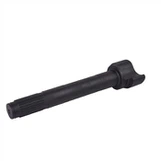
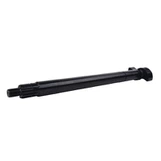
As a supplier of 1094 Brake Camshafts, I've witnessed firsthand how the manufacturing process can significantly impact the quality of these crucial components. In the automotive and heavy - machinery industries, the 1094 Brake Camshaft plays a vital role in ensuring reliable braking performance. Let's delve into the various aspects of the manufacturing process and their effects on the quality of the 1094 Brake Camshaft.


Material Selection
The journey of a high - quality 1094 Brake Camshaft begins with the selection of the right material. The material must possess excellent mechanical properties such as high strength, good wear resistance, and sufficient toughness. Commonly used materials for brake camshafts include alloy steels. These steels are carefully chosen based on their chemical composition and heat - treatment response.
For instance, a well - selected alloy steel with the appropriate carbon and alloying element content can withstand the high stresses and frictional forces that the camshaft experiences during operation. If the material is of poor quality or not suitable for the application, it can lead to premature wear, deformation, or even breakage of the camshaft. This can result in reduced braking efficiency and pose a serious safety risk.
Forging Process
Forging is a critical step in the manufacturing of 1094 Brake Camshafts. During forging, the raw material is heated to a specific temperature and then shaped using a forging press. This process helps to refine the grain structure of the material, improving its mechanical properties.
A proper forging process ensures that the camshaft has a uniform and dense structure. If the forging is not done correctly, such as improper heating or insufficient pressure during the forging operation, it can lead to defects like voids, cracks, or non - uniform grain distribution. These defects can weaken the camshaft and make it more prone to failure under stress.
Machining Operations
After forging, the 1094 Brake Camshaft undergoes a series of machining operations, including turning, milling, and grinding. These operations are essential for achieving the precise dimensions and surface finish required for the camshaft to function properly.
Precision machining is crucial because even a small deviation in the dimensions of the camshaft can affect its interaction with other braking components. For example, if the cam profile is not machined accurately, it can lead to uneven braking force distribution, causing the brakes to grab or release unevenly. This can result in a jerky braking experience and increased wear on the brake linings.
Moreover, the surface finish of the camshaft also matters. A smooth surface finish reduces friction between the camshaft and the brake components, which in turn reduces wear and improves the overall efficiency of the braking system. Poor surface finish can lead to increased friction, heat generation, and premature wear of the camshaft and other related parts.
Heat Treatment
Heat treatment is another key process that has a profound impact on the quality of the 1094 Brake Camshaft. The main purpose of heat treatment is to enhance the hardness, strength, and wear resistance of the camshaft.
There are different types of heat treatment processes, such as quenching and tempering. Quenching involves rapidly cooling the heated camshaft in a quenching medium, which hardens the material. Tempering is then carried out to relieve the internal stresses generated during quenching and to improve the toughness of the camshaft.
If the heat treatment process is not properly controlled, it can lead to problems. For example, over - quenching can make the camshaft too brittle, increasing the risk of cracking. On the other hand, under - tempering can result in a camshaft that is not tough enough to withstand the operating stresses.
Surface Coating
Applying a surface coating to the 1094 Brake Camshaft can further enhance its performance and durability. Surface coatings can provide additional protection against wear, corrosion, and friction.
There are various types of surface coatings available, such as nitriding and chrome plating. Nitriding involves diffusing nitrogen into the surface of the camshaft, forming a hard and wear - resistant nitride layer. Chrome plating provides a smooth and corrosion - resistant surface.
A well - applied surface coating can significantly extend the service life of the camshaft. However, if the coating process is not done correctly, the coating may not adhere properly, leading to premature peeling or flaking. This can expose the underlying material to wear and corrosion, reducing the quality and performance of the camshaft.
Quality Control and Inspection
Throughout the manufacturing process, strict quality control and inspection procedures are essential to ensure the quality of the 1094 Brake Camshaft. This includes both in - process inspection and final inspection.
In - process inspection allows for the detection and correction of any defects or deviations early in the manufacturing process. For example, during machining, dimensional inspections can be carried out using precision measuring tools to ensure that the camshaft meets the required specifications.
Final inspection is the last step before the camshaft is shipped to the customer. It involves a comprehensive check of the camshaft's dimensions, surface finish, hardness, and other critical properties. Only camshafts that pass all the inspection criteria are considered to be of high quality and ready for use.
Impact on the Market and End - Users
The quality of the 1094 Brake Camshaft directly affects the market perception of the product and the satisfaction of end - users. A high - quality camshaft that is manufactured using proper processes will have a longer service life, better performance, and fewer maintenance requirements. This can lead to increased customer loyalty and a positive reputation in the market.
On the other hand, a low - quality camshaft can result in frequent breakdowns, costly repairs, and safety concerns for the end - users. This can damage the reputation of the supplier and lead to a loss of customers.
Related Products in the Market
In the market, there are various related brake camshaft products that also emphasize the importance of quality manufacturing. For example, you can check out the BENZ BRAKE CAMSHAFT 3854210136/6174210136 length 380mm, which is designed with specific dimensions and high - quality manufacturing processes to ensure optimal performance. The trailer brake camshaft is another product that needs to meet strict quality standards to provide reliable braking for trailers. And the Brake Braking S - Camshaft Drive Shaft also plays a crucial role in the braking system and requires precise manufacturing.
Conclusion
In conclusion, the manufacturing process of the 1094 Brake Camshaft has a far - reaching impact on its quality. From material selection to surface coating and quality control, every step in the process must be carefully managed to ensure that the camshaft meets the highest standards. A high - quality camshaft not only provides reliable braking performance but also enhances the safety and efficiency of the entire braking system.
If you are in the market for high - quality 1094 Brake Camshafts or have any questions about our products, we invite you to contact us for procurement discussions. We are committed to providing you with the best - quality products and excellent customer service.
References
- Smith, J. (2018). Automotive Brake System Components: Design and Manufacturing. Publisher XYZ.
- Johnson, R. (2019). Handbook of Forging Processes and Their Impact on Component Quality. Publisher ABC.
- Brown, T. (2020). Surface Coatings for Mechanical Components: Principles and Applications. Publisher DEF.