In the intricate world of automotive and heavy - duty machinery, the interaction between the S Camshaft and the crankshaft is a fundamental aspect that ensures the proper functioning of the braking system and the overall engine operation. As a trusted S Camshaft supplier, I am excited to delve into the details of how these two crucial components interact and their significance in the mechanical ecosystem.
Understanding the Basics: S Camshaft and Crankshaft
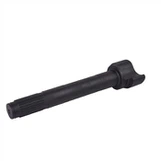
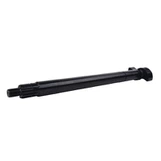
Before we explore their interaction, let's first understand what an S Camshaft and a crankshaft are. The S CAM is a key part of the air brake system, commonly found in trucks, buses, and trailers. It has an "S" shape, and when rotated, it pushes the brake shoes against the brake drum, creating the friction needed to slow down or stop the vehicle.
On the other hand, the crankshaft is an essential component of the engine. It converts the linear reciprocating motion of the pistons into rotational motion, which is then used to drive the wheels of the vehicle. The crankshaft is connected to the pistons via connecting rods and is responsible for transmitting the power generated by the engine to the drivetrain.
The Indirect Interaction between S Camshaft and Crankshaft
Although the S Camshaft and the crankshaft serve different primary functions, there is an indirect yet significant interaction between them. The power generated by the engine, with the crankshaft at its core, is used to drive the various systems of the vehicle, including the air compressor. The air compressor is responsible for generating the compressed air needed to operate the air brake system, where the S Camshaft plays a crucial role.
When the engine is running, the crankshaft rotates, and this rotational motion drives the air compressor. The air compressor then pumps air into the air storage tanks. When the driver applies the brakes, compressed air from the storage tanks is released into the brake chambers. Inside the brake chambers, the air pressure causes a diaphragm to move, which in turn rotates the S CAM. As the S Camshaft rotates, it forces the brake shoes against the brake drum, initiating the braking process.
Synchronization and Timing
Proper synchronization and timing are vital for the efficient interaction between the engine's crankshaft and the S Camshaft in the braking system. In a well - functioning vehicle, the air pressure generation by the air compressor, which is driven by the crankshaft, must be synchronized with the braking demand. If the air compressor fails to generate enough air pressure, the S Camshaft may not rotate sufficiently to apply the brakes effectively, leading to longer stopping distances.
Moreover, the timing of the braking system is also crucial. The driver's input on the brake pedal should result in an immediate and consistent response from the S Camshaft. Any delay or inconsistency in the air pressure delivery can affect the performance of the S Camshaft and compromise the safety of the vehicle.
Different Types of S Camshafts and Their Impact on Interaction
There are various types of S Camshafts available, each designed for specific applications. For example, the Trailer S CAM is specifically tailored for trailers. Trailers often have different weight and braking requirements compared to the towing vehicle. The design of the Trailer S Camshaft takes these factors into account, ensuring that the braking force is appropriate for the trailer's load.
The Camshaft for Truck is engineered to handle the heavy - duty requirements of trucks. Trucks typically carry large loads and operate under different driving conditions, so the truck camshaft must be able to provide reliable and strong braking force. The interaction between the crankshaft - driven air compressor and these different types of S Camshafts must be fine - tuned to ensure optimal braking performance.
Wear and Tear and Its Effect on Interaction
Over time, both the S Camshaft and the components related to the crankshaft - driven air system can experience wear and tear. The S Camshaft is constantly subjected to friction as it rotates to apply the brakes. This friction can cause the cam surface to wear down, reducing its ability to push the brake shoes effectively.
In the air system, components such as the air compressor, valves, and hoses can also wear out. A worn - out air compressor may not be able to generate sufficient air pressure, which directly affects the operation of the S Camshaft. If the air hoses develop leaks, the air pressure reaching the brake chambers will be inconsistent, leading to uneven braking and potentially dangerous situations.


Regular maintenance is essential to ensure the proper interaction between the S Camshaft and the crankshaft - driven air system. This includes inspecting the S Camshaft for wear, checking the air compressor for proper operation, and replacing any worn - out components in a timely manner.
Importance of Quality S Camshafts in the Interaction
As an S Camshaft supplier, I understand the critical role that high - quality S Camshafts play in the interaction with the crankshaft - driven air system. A well - manufactured S Camshaft is made from high - grade materials that can withstand the constant friction and stress during operation. It is precisely machined to ensure smooth rotation and accurate application of the brake shoes.
Using a low - quality S Camshaft can lead to a host of problems. It may not rotate smoothly, causing uneven braking and premature wear of the brake shoes. In extreme cases, a faulty S Camshaft can even cause the brakes to fail completely, posing a serious risk to the safety of the vehicle and its occupants.
Choosing the Right S Camshaft for Your Vehicle
When selecting an S Camshaft, several factors need to be considered. First, you need to determine the type of vehicle and its specific requirements. As mentioned earlier, trailers, trucks, and buses have different braking needs, so it is crucial to choose the appropriate S CAM for your application, whether it is a Trailer S CAM or a Camshaft for Truck.
Secondly, pay attention to the quality of the S Camshaft. Look for suppliers who use high - quality materials and have strict manufacturing processes. A reliable supplier will also provide technical support and after - sales service to ensure that you get the most out of your S Camshaft.
Conclusion
The interaction between the S Camshaft and the crankshaft is a complex but vital aspect of vehicle operation. The power generated by the crankshaft drives the air compressor, which in turn provides the air pressure needed to operate the S Camshaft in the braking system. Proper synchronization, high - quality components, and regular maintenance are all essential for ensuring the efficient and safe interaction between these two components.
If you are in the market for high - quality S Camshafts, whether it's for trailers, trucks, or other heavy - duty vehicles, we are here to assist you. Our extensive range of S CAM, Trailer S CAM, and Camshaft for Truck products are designed to meet the highest standards of quality and performance. Contact us for a detailed discussion on your requirements and let's work together to ensure the optimal braking performance of your vehicles.
References
- Automotive Brake Systems Handbook, various authors
- Principles of Engine Operation and Drivetrain Mechanics, industry - standard textbooks