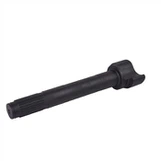
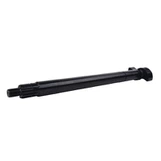
In the realm of heavy - truck diesel engines, the camshaft plays a pivotal role in determining the injection timing, which in turn significantly impacts the engine's performance, efficiency, and emissions. As a leading Heavy Truck Camshaft supplier, I've witnessed firsthand how the camshaft's design and operation intricately influence the fuel injection process.
The Basics of a Heavy - Truck Diesel Engine
Before delving into the relationship between the camshaft and injection timing, it's essential to understand the fundamental workings of a heavy - truck diesel engine. Unlike gasoline engines that use spark plugs to ignite the air - fuel mixture, diesel engines rely on the heat generated by compressing air in the combustion chamber. When the piston compresses the air to a high pressure and temperature, fuel is injected into the chamber, where it ignites spontaneously.
The four - stroke cycle of a diesel engine consists of intake, compression, power, and exhaust strokes. Each stroke is precisely timed to ensure efficient engine operation. The camshaft is a crucial component that controls the opening and closing of the engine's valves and, in some cases, the fuel injection process.
The Role of the Camshaft
The camshaft is a rotating shaft with a series of cams (lobes) that are designed to convert the rotational motion of the shaft into linear motion. These cams actuate the engine's valves and, in diesel engines with mechanical injection systems, the fuel injectors.


In a heavy - truck diesel engine, the camshaft is typically driven by the crankshaft through a timing belt, chain, or gears. The ratio of the camshaft's rotation to the crankshaft's rotation is usually 1:2, meaning the camshaft rotates once for every two rotations of the crankshaft. This ensures that the valves open and close at the appropriate times during the four - stroke cycle.
How the Camshaft Affects Injection Timing
Mechanical Injection Systems
In older heavy - truck diesel engines with mechanical injection systems, the camshaft directly controls the fuel injection timing. The camshaft has a special lobe dedicated to actuating the fuel injection pump. As the camshaft rotates, the lobe pushes against a plunger in the injection pump, which pressurizes the fuel and forces it into the injector.
The shape and position of the cam lobe determine when and for how long the fuel is injected into the combustion chamber. A well - designed cam lobe can optimize the injection timing to ensure that the fuel is injected at the right moment during the compression stroke. If the injection occurs too early, the fuel may ignite before the piston reaches the top - dead - center (TDC), causing knocking and potentially damaging the engine. On the other hand, if the injection occurs too late, the fuel may not burn completely, leading to reduced power output, increased fuel consumption, and higher emissions.
Electronic Injection Systems
Modern heavy - truck diesel engines often use electronic injection systems, which are more precise and flexible than mechanical systems. However, the camshaft still plays an important role in these systems.
In electronic injection systems, the camshaft position sensor provides information about the position of the camshaft to the engine control unit (ECU). The ECU uses this information, along with other data such as engine speed, load, and temperature, to calculate the optimal injection timing.
The camshaft position sensor detects the position of the camshaft by sensing the passage of a tooth or a notch on the camshaft. This information allows the ECU to synchronize the injection process with the engine's cycle. For example, if the camshaft position sensor indicates that the piston is approaching TDC during the compression stroke, the ECU can trigger the injector to inject the fuel at the appropriate time.
Impact of Camshaft Design on Injection Timing
The design of the camshaft has a profound impact on the injection timing and, consequently, the engine's performance. Some of the key design factors include:
Cam Lobe Profile
The shape of the cam lobe determines the rate at which the injector plunger moves and, therefore, the rate of fuel injection. A cam lobe with a steep profile can cause the injector to open and close quickly, resulting in a short but high - pressure injection. This can be beneficial for achieving better atomization of the fuel and more efficient combustion.
Conversely, a cam lobe with a more gradual profile may result in a longer injection duration but lower injection pressure. This type of cam lobe may be suitable for engines that require a more controlled and slower - burning fuel injection, such as those operating at low loads.
Camshaft Duration
The duration of the camshaft refers to the length of time that the cam lobe is in contact with the injector or valve follower. A longer camshaft duration means that the injector or valve will be open for a longer period. This can affect the injection timing and the amount of fuel injected into the combustion chamber.
For example, in a high - performance heavy - truck diesel engine, a camshaft with a longer duration may be used to increase the amount of air and fuel that can enter the combustion chamber, resulting in higher power output. However, this may also require more precise control of the injection timing to ensure efficient combustion.
Importance of Proper Injection Timing
Proper injection timing is crucial for the efficient operation of a heavy - truck diesel engine. Here are some of the key benefits:
Improved Fuel Efficiency
When the fuel is injected at the optimal time, it can burn more completely, resulting in better fuel efficiency. This means that the engine can produce more power with less fuel, reducing operating costs for heavy - truck operators.
Reduced Emissions
Optimal injection timing helps to minimize the formation of harmful emissions such as nitrogen oxides (NOx) and particulate matter (PM). By ensuring that the fuel burns cleanly and efficiently, the engine can meet strict environmental regulations.
Enhanced Power Output
Proper injection timing allows the engine to generate more power. When the fuel is injected at the right moment, it can create a more powerful explosion in the combustion chamber, pushing the piston down with greater force and increasing the engine's torque and horsepower.
Related Components: S CAM
In addition to the camshaft that controls the fuel injection, heavy - truck braking systems often use an S CAM. The S - cam is a type of camshaft used in air brake systems. When the brakes are applied, compressed air forces the S - cam to rotate, which in turn pushes the brake shoes against the brake drum, creating friction and slowing down the vehicle.
The operation of the S - cam is also closely related to the overall performance and safety of the heavy - truck. A well - designed S - cam can ensure reliable and consistent braking performance, which is essential for the safe operation of heavy trucks, especially those carrying heavy loads.
S CAM On Trailer
Trailers attached to heavy trucks also use S CAM On Trailer systems in their braking mechanisms. The S - cam on the trailer works in conjunction with the truck's braking system to provide synchronized and effective braking.
Proper maintenance and design of the S - cam on the trailer are crucial for ensuring the safety of the entire heavy - truck combination. Any malfunction or wear in the S - cam system can lead to uneven braking, reduced stopping power, and potentially dangerous situations on the road.
Conclusion
As a Heavy Truck Camshaft supplier, I understand the critical role that the camshaft plays in the injection timing of heavy - truck diesel engines. The camshaft's design and operation directly influence when and how the fuel is injected into the combustion chamber, which has a significant impact on the engine's performance, efficiency, and emissions.
Whether you are an engine manufacturer looking to optimize the performance of your heavy - truck diesel engines or a heavy - truck operator in need of high - quality camshafts, we are here to provide you with the best solutions. Our camshafts are designed and manufactured to the highest standards, ensuring precise injection timing and reliable engine operation.
If you are interested in learning more about our heavy - truck camshafts or would like to discuss your specific requirements, please feel free to contact us. We look forward to working with you to enhance the performance and efficiency of your heavy - truck diesel engines.
References
- Heywood, J. B. (1988). Internal Combustion Engine Fundamentals. McGraw - Hill.
- Taylor, C. F. (1985). The Internal Combustion Engine in Theory and Practice. MIT Press.