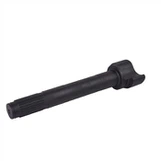
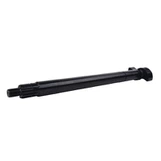
As a supplier of S Camshafts, I've often been asked whether an S Camshaft can be optimized for a specific engine application. The answer is a resounding yes, and in this blog post, I'll delve into the details of how and why this optimization is not only possible but also highly beneficial.
Understanding the S Camshaft
Before we discuss optimization, let's first understand what an S Camshaft is. The S Camshaft is a crucial component in many braking systems, especially in heavy - duty vehicles. Its unique S - shape design allows it to convert rotational motion into linear motion, which in turn activates the brake shoes. This mechanism is fundamental for ensuring reliable and efficient braking performance.
In the context of engine applications, the S Camshaft can also play a role in valve timing and actuation. Just like in braking systems, its shape and dimensions determine how it interacts with other engine components, such as valves and lifters.
Factors Affecting Optimization
There are several factors that need to be considered when optimizing an S Camshaft for a specific engine application.
Engine Type and Configuration
Different engine types, such as gasoline, diesel, or hybrid, have different requirements. For example, a diesel engine typically operates at higher compression ratios and requires more precise valve timing to ensure efficient combustion. A four - cylinder engine will have different space and performance requirements compared to a V8 engine. The S Camshaft needs to be designed to fit the physical layout of the engine, including the valve arrangement and the available space within the engine block.
Performance Goals
The intended performance of the engine is a major factor. If the goal is to achieve high - end power for a racing application, the S Camshaft may need to be designed with a more aggressive cam profile. This means that the cam lobes will have a greater lift and duration, allowing more air - fuel mixture to enter the combustion chamber and more exhaust gases to exit. On the other hand, if the focus is on fuel efficiency and low - end torque for a daily - driven vehicle, a milder cam profile may be more appropriate.
Operating Conditions
The operating conditions of the engine also matter. Engines that operate in extreme temperatures, high - altitude environments, or under heavy loads require a camshaft that can withstand these conditions. For instance, in a high - altitude area, the air is thinner, so the engine may need a camshaft that can optimize the intake of the available air.
The Optimization Process
Design and Modeling
The first step in optimizing an S Camshaft is to use advanced design and modeling tools. Computer - Aided Design (CAD) software allows engineers to create a virtual model of the camshaft. They can adjust the shape, size, and profile of the cam lobes to meet the specific requirements of the engine. Finite Element Analysis (FEA) can also be used to simulate the stress and strain on the camshaft during operation, ensuring that it can withstand the forces without failure.
Material Selection
Choosing the right material for the S Camshaft is crucial. High - strength alloys are often used to ensure durability and resistance to wear. The material should also have good heat - treating properties, as heat treatment can improve the hardness and toughness of the camshaft. For example, some camshafts are made from forged steel, which offers excellent strength and can be precisely machined to the required specifications.
Manufacturing and Testing
Once the design is finalized, the S Camshaft is manufactured using precision machining techniques. After manufacturing, the camshaft undergoes rigorous testing. This includes dimensional inspection to ensure that it meets the design specifications, as well as performance testing on an engine dynamometer. The engine is run under various conditions to evaluate the camshaft's impact on power, torque, fuel efficiency, and emissions.
Benefits of Optimization
Improved Performance
Optimizing the S Camshaft can significantly improve the engine's performance. By precisely controlling the valve timing, the engine can achieve better combustion, resulting in increased power and torque. This is especially important in high - performance applications, where every bit of power matters.
Enhanced Fuel Efficiency
A well - optimized S Camshaft can also improve fuel efficiency. By ensuring that the right amount of air - fuel mixture enters the combustion chamber at the right time, the engine can burn fuel more efficiently. This reduces fuel consumption and lowers emissions, making the engine more environmentally friendly.
Increased Reliability
When the S Camshaft is optimized for a specific engine application, it is less likely to experience premature wear or failure. This is because it is designed to operate within the engine's normal operating conditions, reducing stress on the component and increasing its overall reliability.
Applications of Optimized S Camshafts
Heavy - Duty Trucks
In heavy - duty trucks, Trailer Axle Brake Camshaft and Trailer S Camshaft are critical for reliable braking. Optimized S Camshafts can ensure that the brakes are applied evenly and effectively, reducing the risk of accidents. In addition, in the engine of heavy - duty trucks, an optimized S Camshaft can improve fuel efficiency and power, which is essential for long - haul operations.
Racing Vehicles
Racing vehicles require high - performance engines. An optimized S Camshaft can provide the precise valve timing needed to generate maximum power at high RPMs. This gives racing teams a competitive edge on the track.
Industrial Engines
Industrial engines, such as those used in generators or construction equipment, also benefit from optimized S Camshafts. These engines often operate under heavy loads for extended periods, and an optimized camshaft can improve their efficiency and reliability.


Conclusion
In conclusion, an S Camshaft can definitely be optimized for a specific engine application. Through careful consideration of engine type, performance goals, and operating conditions, and by using advanced design, material selection, manufacturing, and testing techniques, we can create S Camshafts that offer improved performance, enhanced fuel efficiency, and increased reliability.
If you are in the market for high - quality, optimized S Camshafts for your engine application, I encourage you to reach out to us. We have the expertise and experience to provide you with the best solutions tailored to your specific needs. Whether you are a heavy - duty truck manufacturer, a racing team, or an industrial equipment supplier, we can work with you to develop the perfect S Camshaft for your engine.
References
- Heywood, J. B. (1988). Internal Combustion Engine Fundamentals. McGraw - Hill.
- Taylor, C. F. (1966). The Internal Combustion Engine in Theory and Practice. MIT Press.