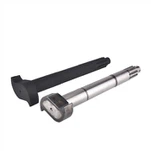
Quality Inspection for Each Process of Brake Camshaft
The quality inspection of brake camshafts at each production stage is crucial for ensuring product reliability and safety.
Raw Material Inspection: The process begins with strict scrutiny of raw materials. Inspectors verify material certificates to ensure compliance with specifications, such as the correct grade of steel for sufficient strength and durability. Nondestructive testing methods like ultrasonic testing detect internal defects, cracks, or inclusions that could compromise performance.
Machining Process Inspection: During rough machining, dimensional checks using calipers and micrometers ensure that the initial shaping meets design tolerances. Surface roughness is measured to guarantee proper fitment with other components. In finish machining, more precise inspections are carried out. Coordinate Measuring Machines (CMMs) accurately measure complex geometries, ensuring the cam profiles are within ±0.01mm precision. Additionally, hardness testing at key areas verifies that the material has the appropriate mechanical properties.
Heat Treatment and Surface Treatment Inspection: After heat treatment, hardness testing across different sections confirms the effectiveness of the process, ensuring the camshaft has the right balance of hardness and toughness. For surface treatments like electroplating or coating, visual inspections detect any unevenness or defects. Thickness gauges measure the coating thickness to ensure protection against wear and corrosion.
Final Assembly and Packaging Inspection: Before assembly, a comprehensive final inspection checks for any damages or machining errors. Functional tests simulate real - world operating conditions to verify the camshaft's performance. During packaging, inspectors ensure proper protection to prevent damage during transportation, checking for correct labeling and packaging materials.