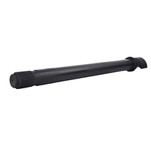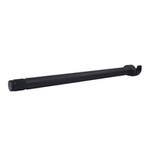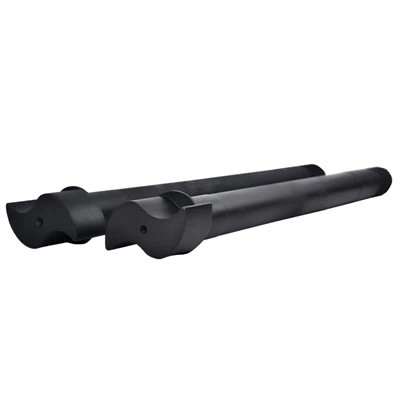
The brake camshaft is a key component in drum brake systems, operating on mechanical transmission principles to achieve braking. Here's its working mechanism:
When the driver presses the brake pedal, the force is transmitted through the brake push rod, master cylinder, and related linkage to the camshaft's lever arm. This force causes the lever arm to rotate the camshaft.
As the camshaft turns, its eccentric cam (a protrusion with a specific contour) rotates simultaneously. The cam's unique shape is designed to push against the brake shoes as it spins. As the cam rotates, its raised portion forces the brake shoes to pivot outward around their mounting points.
This outward movement makes the brake shoes press tightly against the inner surface of the brake drum. The friction generated between the shoes and the drum resists the drum's rotation, which is connected to the wheel, thereby slowing or stopping the wheel's movement, achieving the braking effect.
When the brake pedal is released, return springs pull the brake shoes back to their original position. This reverse force causes the camshaft to rotate backward, resetting the cam to its initial position, and the braking action is terminated.
In essence, the brake camshaft converts linear pedal force into rotational motion via the lever, then transforms this rotation into radial expansion of the brake shoes through the cam's contour, ultimately relying on friction to complete the braking process.