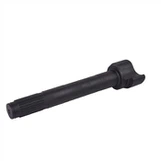
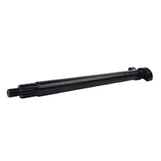
As a leading heavy truck camshaft supplier, I've witnessed firsthand the critical role that camshafts play in the performance and reliability of heavy trucks. A camshaft is not just a simple component; it's the heart of an engine's valve - train system, dictating when the intake and exhaust valves open and close. In this blog, I'll delve into the materials used to make heavy - truck camshafts, exploring their properties, advantages, and limitations.
Cast Iron
Cast iron is one of the most commonly used materials for heavy - truck camshafts. It has a long - standing reputation in the automotive industry due to its excellent castability, wear resistance, and cost - effectiveness.
Gray Cast Iron
Gray cast iron is a popular choice for camshafts. It contains graphite flakes in its microstructure, which give it self - lubricating properties. This is especially beneficial in camshaft applications, as it reduces friction between the cam lobes and the valve lifters. The graphite flakes also act as stress relievers, enhancing the material's ability to absorb vibrations.
However, gray cast iron has some limitations. Its relatively low tensile strength means that it may not be suitable for high - performance or high - stress applications. In heavy trucks that operate under extreme conditions, such as long - haul trucks or those used in heavy - duty construction, gray cast iron camshafts may experience premature wear or even failure.


Ductile Cast Iron
Ductile cast iron, also known as nodular cast iron, offers improved mechanical properties compared to gray cast iron. It has graphite nodules instead of flakes, which gives it higher tensile strength, ductility, and toughness. Ductile cast iron camshafts can withstand higher loads and stresses, making them a better choice for heavy - duty applications.
The manufacturing process of ductile cast iron camshafts involves adding magnesium to the molten iron, which promotes the formation of graphite nodules. This process requires careful control to ensure the desired microstructure and properties are achieved. Despite the slightly higher cost compared to gray cast iron, the enhanced performance and durability of ductile cast iron camshafts make them a popular option for many heavy - truck manufacturers.
Steel
Steel is another important material used in the production of heavy - truck camshafts. It offers superior strength, hardness, and fatigue resistance compared to cast iron, making it suitable for high - performance and high - stress applications.
Carbon Steel
Carbon steel is a basic form of steel that contains carbon as the main alloying element. It is relatively inexpensive and easy to machine, making it a common choice for camshafts. However, its hardness and wear resistance may not be sufficient for heavy - truck applications without proper heat treatment.
Heat treatment processes such as quenching and tempering can significantly improve the hardness and strength of carbon steel camshafts. By heating the camshaft to a specific temperature and then rapidly cooling it (quenching), followed by a tempering process to relieve internal stresses, the material's mechanical properties can be tailored to meet the requirements of heavy - truck engines.
Alloy Steel
Alloy steel contains additional alloying elements such as chromium, nickel, molybdenum, and vanadium. These elements enhance the material's strength, hardness, wear resistance, and corrosion resistance. Alloy steel camshafts are often used in high - performance heavy - truck engines where reliability and durability are of utmost importance.
For example, a camshaft made of chromium - molybdenum alloy steel can withstand high - temperature and high - pressure conditions, making it suitable for heavy - duty diesel engines. The alloying elements also improve the material's ability to resist fatigue cracking, which is crucial in applications where the camshaft is subjected to repeated cyclic loading.
Powder Metallurgy
Powder metallurgy is a manufacturing process that involves compacting metal powders into a desired shape and then sintering them at high temperatures to form a solid component. This process offers several advantages for making heavy - truck camshafts.
Material Flexibility
Powder metallurgy allows for the use of a wide range of materials, including iron - based alloys, stainless steels, and even composite materials. This flexibility enables manufacturers to tailor the material properties of the camshaft to meet specific application requirements. For example, a powder - metallurgy camshaft can be designed to have a hard outer surface for wear resistance and a tough inner core for strength.
Near - Net - Shape Manufacturing
One of the key advantages of powder metallurgy is its ability to produce components with near - net - shape accuracy. This reduces the amount of machining required, resulting in lower production costs and shorter lead times. Additionally, the near - net - shape manufacturing process minimizes material waste, making it an environmentally friendly option.
Improved Microstructure
The powder - metallurgy process can produce a fine - grained and homogeneous microstructure, which enhances the mechanical properties of the camshaft. The fine - grained structure improves the material's hardness, wear resistance, and fatigue resistance, making powder - metallurgy camshafts a competitive option for heavy - truck applications.
Surface Treatments
Regardless of the base material used, surface treatments are often applied to heavy - truck camshafts to further improve their performance and durability.
Nitriding
Nitriding is a surface - hardening process that involves diffusing nitrogen into the surface of the camshaft. This creates a hard and wear - resistant nitride layer on the surface, which can significantly improve the camshaft's resistance to wear, corrosion, and fatigue. Nitriding can be performed on both cast iron and steel camshafts, and it is commonly used in heavy - truck applications to extend the service life of the camshaft.
Induction Hardening
Induction hardening is a heat - treatment process that uses electromagnetic induction to heat the surface of the camshaft rapidly. The heated surface is then quenched to form a hard martensitic layer. Induction hardening is a selective hardening process, which means that only the critical areas of the camshaft, such as the cam lobes, can be hardened. This allows for precise control of the material properties and can improve the camshaft's performance without affecting the overall toughness of the component.
Conclusion
In conclusion, the choice of material for a heavy - truck camshaft depends on a variety of factors, including the application requirements, performance expectations, and cost considerations. Cast iron, steel, and powder - metallurgy materials each offer unique advantages and limitations, and surface treatments can further enhance the performance and durability of the camshaft.
As a heavy - truck camshaft supplier, we are committed to providing high - quality camshafts made from the best materials and using the latest manufacturing processes. Whether you need a camshaft for a long - haul truck, a heavy - duty construction vehicle, or any other heavy - truck application, we have the expertise and resources to meet your needs.
If you are interested in learning more about our heavy - truck camshafts or would like to discuss your specific requirements, please feel free to contact us for a procurement negotiation. We look forward to working with you to ensure the optimal performance and reliability of your heavy - truck engines.
For more information about related products, you can visit the following links:
Trailer S Camshaft
S CAM
Trailer Axle Camshaft
References
- "Automotive Engine Design" by David Crolla
- "Materials Science and Engineering: An Introduction" by William D. Callister Jr. and David G. Rethwisch
- "Powder Metallurgy Technology" by Randall M. German