The relationship between a truck camshaft and the pistons is a fundamental aspect of a truck's engine operation. As a truck camshaft supplier, I have witnessed firsthand how these two components work in harmony to ensure the efficient functioning of a truck's engine.
The Basics of a Truck Camshaft
A truck camshaft is a crucial component in the engine's valve - train system. It is a long, cylindrical shaft with a series of lobes or cams protruding from its surface. These lobes are precisely shaped and positioned to control the opening and closing of the engine's intake and exhaust valves.
The camshaft is driven by the engine's crankshaft, usually through a timing belt, chain, or gears. The rotation of the crankshaft causes the camshaft to turn at a specific speed, typically half the speed of the crankshaft in a four - stroke engine. This synchronized rotation is essential for the proper operation of the engine.
The Role of Pistons in a Truck Engine
Pistons are cylindrical components that move up and down inside the engine's cylinders. They are connected to the crankshaft via connecting rods. When the fuel - air mixture in the cylinder is ignited by the spark plug (in a gasoline engine) or by compression (in a diesel engine), the resulting explosion creates high - pressure gases. These gases push the piston down, which in turn rotates the crankshaft.
The movement of the pistons is what ultimately generates the power that propels the truck forward. The pistons go through four strokes in a four - stroke engine: intake, compression, power, and exhaust.
The Synchronized Relationship
The relationship between the truck camshaft and the pistons is all about synchronization. The camshaft's lobes are designed to open and close the intake and exhaust valves at the exact moments when the pistons are in the appropriate positions during their four - stroke cycle.
During the intake stroke, the piston moves downward, creating a vacuum in the cylinder. At this time, the camshaft's intake lobe pushes open the intake valve, allowing the fuel - air mixture to enter the cylinder. The precise timing of this valve opening is crucial. If the valve opens too early or too late, the engine may not receive the correct amount of the fuel - air mixture, leading to reduced power and efficiency.
In the compression stroke, the piston moves upward, compressing the fuel - air mixture. The intake and exhaust valves are both closed during this stroke, and the camshaft keeps them in the closed position.
When the power stroke occurs, the compressed fuel - air mixture is ignited, and the piston is forced downward. The valves remain closed to contain the high - pressure gases and ensure maximum power transfer to the crankshaft.
Finally, during the exhaust stroke, the piston moves upward again. The camshaft's exhaust lobe then opens the exhaust valve, allowing the burned gases to be expelled from the cylinder.
Impact on Engine Performance
The proper functioning of the camshaft - piston relationship has a significant impact on the truck engine's performance. A well - designed camshaft can optimize the engine's power output, fuel efficiency, and emissions.
For example, a camshaft with aggressive lobes can open the valves wider and for a longer time. This can increase the engine's power at high RPMs, but it may also reduce low - end torque and fuel efficiency. On the other hand, a camshaft with milder lobes may provide better low - end performance and fuel economy but sacrifice some high - end power.
If there is a misalignment or malfunction in the camshaft - piston synchronization, it can lead to a variety of problems. Valve - piston interference can occur if the valves open when the pistons are in the wrong position, which can cause severe engine damage. Other symptoms of a synchronization problem include rough idling, loss of power, and increased fuel consumption.
Different Types of Camshafts and Their Influence
There are different types of camshafts used in trucks, such as flat - tappet camshafts and roller camshafts. Flat - tappet camshafts are more traditional and have a flat surface on the tappet that rides on the cam lobe. Roller camshafts, on the other hand, use a roller - tipped tappet, which reduces friction and wear.
The choice of camshaft can also affect the relationship with the pistons. A roller camshaft can provide more precise valve control, which can enhance the synchronization with the pistons and improve overall engine performance.
Our Offerings as a Truck Camshaft Supplier
As a truck camshaft supplier, we understand the critical role that camshafts play in the engine's operation and their relationship with the pistons. We offer a wide range of high - quality camshafts designed to meet the specific needs of different truck engines.
Our camshafts are manufactured using advanced materials and precision machining techniques to ensure accurate lobe profiles and smooth operation. We also offer custom - made camshafts for customers who require specific performance characteristics.

We have camshafts suitable for various truck models, including those with different engine displacements and power requirements. Whether you need a camshaft for a light - duty truck or a heavy - duty commercial vehicle, we can provide the right solution.
Related Camshaft Products
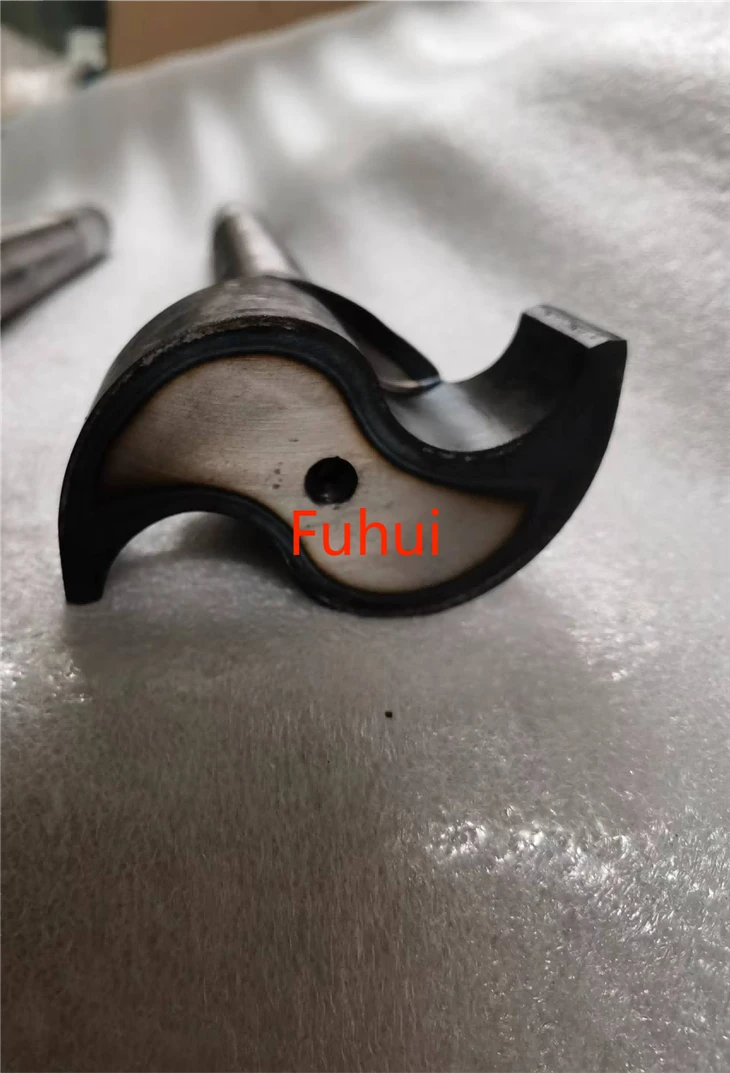
In addition to engine camshafts, we also supply other types of camshafts related to truck braking systems. For example, we offer S CAM, which is an important component in the air - brake system of trucks. The S - cam is used to convert the linear motion of the brake actuator into the rotational motion required to apply the brakes.
We also have Brake Camshaft Of HinoHeavy Truck, specifically designed for Hino heavy - duty trucks. These camshafts are engineered to provide reliable and efficient braking performance.
Another product in our portfolio is the Trailer S Camshaft, which is used in trailer braking systems. These camshafts are crucial for ensuring the safety of trailers on the road.
Contact Us for Procurement
If you are in the market for high - quality truck camshafts or related products, we invite you to contact us for procurement and further discussion. Our team of experts is ready to assist you in selecting the right camshaft for your specific needs. Whether you are a truck manufacturer, a repair shop, or an individual truck owner, we can provide you with the best solutions at competitive prices.
References
- Heywood, J. B. (1988). Internal Combustion Engine Fundamentals. McGraw - Hill.
- Taylor, C. F. (1985). The Internal Combustion Engine in Theory and Practice. MIT Press.