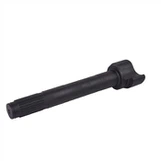
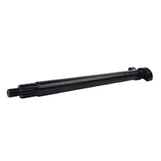
As a dedicated supplier of Semi Trailer S Cams, I understand the importance of sustainable practices in the automotive and transportation industry. Recycling Semi Trailer S Cams is not only environmentally responsible but also economically viable. In this blog post, I will explore various recycling methods for Semi Trailer S Cams, highlighting their significance and practical implementation.
Understanding Semi Trailer S Cams
Before delving into the recycling methods, it's essential to understand what Semi Trailer S Cams are and their role in the braking system of semi - trailers. The S Cam is a crucial component in the air brake system of heavy - duty vehicles, including semi - trailers. When the brake pedal is pressed, compressed air forces the S Cam to rotate, which in turn pushes the brake shoes against the brake drums, creating friction and slowing down or stopping the vehicle.
The S Cams are typically made of high - strength steel or alloy materials to withstand the high forces and stresses during braking operations. These materials have significant value, both in terms of their physical properties and their potential for reuse through recycling.


Why Recycling Semi Trailer S Cams is Important
Recycling Semi Trailer S Cams offers several benefits. Firstly, it conserves natural resources. The extraction and processing of raw materials for manufacturing new S Cams require a large amount of energy and can have a significant environmental impact. By recycling, we reduce the need for new raw materials, thus preserving the planet's natural resources.
Secondly, recycling helps in reducing waste sent to landfills. Semi Trailer S Cams, when discarded, take up valuable space in landfills and can potentially leach harmful substances into the environment over time. Recycling diverts these components from landfills, contributing to a cleaner and healthier environment.
Economically, recycling can be a cost - effective alternative. The recycled materials can be used to manufacture new S Cams or other automotive components, reducing the production costs associated with using virgin materials.
Recycling Methods for Semi Trailer S Cams
1. Mechanical Recycling
Mechanical recycling is one of the most common methods for recycling Semi Trailer S Cams. This process involves several steps:
- Collection and Sorting: The first step is to collect used Semi Trailer S Cams from various sources, such as vehicle repair shops, scrapyards, and end - of - life vehicle facilities. Once collected, the S Cams are sorted based on their material composition and size. This sorting ensures that similar materials are processed together, improving the efficiency of the recycling process.
- Dismantling and Cleaning: After sorting, the S Cams are dismantled to remove any attached components, such as bearings, seals, and fasteners. These components can be recycled separately. The S Cams are then thoroughly cleaned to remove dirt, grease, and other contaminants. This cleaning step is crucial as it ensures that the recycled material is of high quality.
- Shredding and Crushing: The cleaned S Cams are then shredded or crushed into smaller pieces. This increases the surface area of the material, making it easier to melt and process in subsequent steps. The shredded material is then further processed to separate any non - metallic impurities, such as rubber or plastic, which may have been present on the S Cams.
- Melting and Refining: The shredded and purified S Cam pieces are melted in a furnace at high temperatures. During the melting process, the impurities are removed, and the molten metal is refined to meet the required quality standards. The refined metal can then be cast into new S Cams or other automotive components.
2. Chemical Recycling
Chemical recycling is a more advanced method that can be used for recycling Semi Trailer S Cams, especially when dealing with complex alloy materials.
- Dissolution: In this method, the S Cams are dissolved in a chemical solution. The choice of chemical solution depends on the material composition of the S Cams. For example, if the S Cams are made of a steel alloy, an acid solution may be used to dissolve the metal.
- Separation of Elements: Once the S Cams are dissolved, the different elements in the alloy are separated using various chemical processes. These processes can include precipitation, electrolysis, or solvent extraction. The separated elements can then be used to manufacture new materials or alloys.
- Re - synthesis: After the elements are separated, they can be re - synthesized into new materials with the desired properties. This re - synthesis process allows for the production of high - quality materials that can be used in the manufacturing of new Semi Trailer S Cams.
3. Re - machining and Re - use
In some cases, Semi Trailer S Cams can be re - machined and re - used without undergoing a full - scale recycling process.
- Inspection and Evaluation: The first step is to inspect the used S Cams to determine their condition. S Cams that have minor wear and tear, such as surface scratches or minor dents, may be suitable for re - machining.
- Re - machining: If the S Cams are deemed suitable for re - machining, they are subjected to a series of machining operations, such as grinding, turning, and milling. These operations remove the damaged or worn - out layers of the S Cam, restoring its original dimensions and surface finish.
- Quality Assurance: After re - machining, the S Cams are thoroughly inspected to ensure that they meet the required quality standards. They are tested for hardness, dimensional accuracy, and other critical properties. If they pass the quality tests, they can be re - used in the braking systems of semi - trailers.
Benefits of Different Recycling Methods
Each recycling method has its own set of benefits. Mechanical recycling is relatively simple and cost - effective, making it suitable for large - scale recycling operations. It can handle a wide range of materials and is widely available in many recycling facilities.
Chemical recycling, on the other hand, offers a more precise way of recycling complex alloy materials. It can recover valuable elements from the S Cams and produce high - quality recycled materials. However, it requires more advanced equipment and expertise, and the process can be more expensive.
Re - machining and re - use are beneficial as they can significantly reduce the time and cost associated with manufacturing new S Cams. It also extends the lifespan of the S Cams, reducing waste and conserving resources.
The Role of Suppliers in Recycling
As a Semi Trailer S Cam supplier, I play a crucial role in promoting recycling. I can encourage my customers to return their used S Cams for recycling. This can be done through various incentives, such as offering discounts on new S Cams when customers return their old ones.
I can also work closely with recycling facilities to ensure that the used S Cams are recycled in an efficient and environmentally friendly manner. By providing detailed information about the material composition and manufacturing process of the S Cams, I can help the recycling facilities optimize their recycling methods.
Conclusion
Recycling Semi Trailer S Cams is an important practice that offers significant environmental, economic, and social benefits. Whether through mechanical recycling, chemical recycling, or re - machining and re - use, there are various ways to recycle these crucial automotive components. As a supplier, I am committed to promoting sustainable practices in the industry and encouraging my customers to participate in the recycling process.
If you are interested in purchasing high - quality Semi Trailer S Cams or have any questions about our products and recycling initiatives, please feel free to contact us. We are always ready to discuss your needs and provide the best solutions.
For more information about our Trailer S Camshaft, Front Brake Camshaft, and Rear Brake Camshaft products, you can visit the following links:
Trailer S Camshaft
Front Brake Camshaft
Rear Brake Camshaft
References
- "Automotive Recycling Handbook" - A comprehensive guide on recycling automotive components.
- "Journal of Materials Recycling and Waste Management" - Research articles on the latest recycling technologies and practices.
- Industry reports on sustainable manufacturing in the automotive sector.