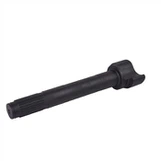
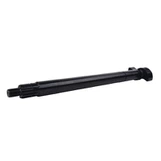
Measuring the dimensions of a 457 Brake Camshaft is a crucial process that ensures the proper functioning and compatibility of this essential automotive component. As a leading supplier of 457 Brake Camshafts, we understand the significance of accurate measurements in maintaining high - quality standards and meeting the diverse needs of our customers. In this blog, we will delve into the step - by - step process of measuring the 457 Brake Camshaft, highlighting the key dimensions and the tools required for precise measurement.
Understanding the 457 Brake Camshaft
The 457 Brake Camshaft is a vital part of the braking system in many heavy - duty vehicles. It plays a pivotal role in converting the rotational motion of the brake actuator into linear motion, which in turn applies pressure to the brake shoes, enabling the vehicle to stop safely. The camshaft's design and dimensions are engineered to provide optimal braking performance, and any deviation from the specified measurements can lead to reduced braking efficiency, uneven wear, and potential safety hazards.
Tools Required for Measurement
Before we start measuring the 457 Brake Camshaft, it's essential to gather the right tools. Here are some of the commonly used tools:
- Vernier Caliper: This is a versatile measuring tool that can accurately measure both internal and external dimensions, such as the diameter of the camshaft journals and the width of the cam lobes.
- Micrometer: A micrometer is used for extremely precise measurements, especially for measuring the diameter of small components with high accuracy. It is ideal for measuring the camshaft's pin diameter.
- Dial Indicator: A dial indicator is used to measure the runout of the camshaft, which is the deviation from a perfect circular rotation. This helps in detecting any bending or misalignment in the camshaft.
- Height Gauge: A height gauge is useful for measuring the height of the cam lobes and other vertical dimensions on the camshaft.
Step - by - Step Measurement Process
1. Measuring the Journal Diameters
The camshaft journals are the cylindrical surfaces that support the camshaft in the engine block. To measure the journal diameters, follow these steps:
- Clean the journal surface thoroughly to remove any dirt, oil, or debris.
- Open the jaws of the vernier caliper and place them around the journal. Make sure the caliper is perpendicular to the axis of the journal.
- Gently close the jaws until they make contact with the journal surface. Take the measurement reading on the caliper scale. Repeat this process at multiple points along the length of the journal to ensure uniformity.
- If a more precise measurement is required, use a micrometer. Place the journal between the anvil and spindle of the micrometer and rotate the thimble until it makes contact with the journal. Read the measurement on the micrometer scale.
2. Measuring the Cam Lobe Dimensions
The cam lobes are the raised portions on the camshaft that actuate the brake shoes. Measuring the cam lobe dimensions is crucial for ensuring proper brake operation.


- Lobe Height: Use a height gauge to measure the height of the cam lobe from the base circle. Place the base of the height gauge on a flat surface and position the measuring tip on the top of the cam lobe. Take the measurement reading.
- Lobe Width: Use a vernier caliper to measure the width of the cam lobe at its widest point. Place the caliper jaws on either side of the lobe and take the reading.
- Lobe Profile: To measure the lobe profile, a more advanced tool such as a cam profile tracer may be required. This tool can accurately map the shape of the cam lobe, ensuring that it conforms to the design specifications.
3. Measuring the Pin Diameter
The camshaft pin is a small cylindrical component that connects the camshaft to other parts of the braking system.
- Use a micrometer to measure the diameter of the pin. Place the pin between the anvil and spindle of the micrometer and rotate the thimble until it makes contact with the pin. Take the measurement reading.
4. Measuring the Runout
The runout of the camshaft refers to the amount of deviation from a perfect circular rotation. Excessive runout can cause uneven wear on the brake components and reduce braking performance.
- Mount the camshaft on a set of V - blocks. Make sure the camshaft is centered and supported properly.
- Attach a dial indicator to a stable surface and position the indicator tip on the journal surface.
- Slowly rotate the camshaft through one full revolution. The dial indicator will show the amount of runout. If the runout exceeds the specified limits, the camshaft may need to be re - machined or replaced.
Importance of Accurate Measurements
Accurate measurements of the 457 Brake Camshaft are essential for several reasons:
- Safety: Properly measured camshafts ensure reliable braking performance, which is crucial for the safety of the vehicle and its occupants.
- Compatibility: Precise measurements ensure that the camshaft is compatible with other components in the braking system, reducing the risk of premature wear and failure.
- Performance: Well - measured camshafts provide optimal braking force, resulting in smooth and efficient braking.
Resources for Further Information
If you are looking for more detailed information about brake camshafts, you can refer to the Bendix Brake Camshaft Catalog. This catalog provides comprehensive information about different types of brake camshafts, their specifications, and applications.
For specific products like Brake S Cams RH, you can visit the dedicated product page. It offers detailed product descriptions and technical details.
Another product that might be of interest is the Foton Daimler OM Truck, Ankai 233 Axle Assembly Brake Camshaft AK*HFF3502053CK2BZFT - 1. The page provides all the necessary information about this particular camshaft.
Conclusion
Measuring the dimensions of the 457 Brake Camshaft is a meticulous process that requires the right tools and techniques. As a supplier, we are committed to providing high - quality camshafts that meet or exceed industry standards. Our team of experts ensures that each camshaft is carefully inspected and measured before it leaves our facility.
If you are in the market for 457 Brake Camshafts or have any questions about measurement, compatibility, or performance, we invite you to contact us for a procurement discussion. We look forward to serving your needs and providing you with the best solutions for your braking system requirements.
References
- Automotive Brake Systems Handbook
- Brake Camshaft Design and Manufacturing Standards