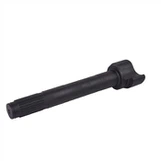
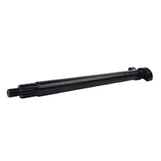
Hey there! I'm a supplier of Semi Trailer S Cams, and today I wanna chat about how the weight of a Semi Trailer S Cam can affect the semi - trailer's load capacity.
First off, let's get a basic understanding of what a Semi Trailer S Cam is. The S Cam is a crucial part of the braking system in semi - trailers. When the brake pedal is pressed, air pressure forces the S Cam to rotate. This rotation pushes the brake shoes against the brake drums, creating friction and slowing down or stopping the trailer.
Now, let's talk about weight. The weight of the S Cam might seem like a small factor, but it can have a big impact on the overall load - carrying ability of the semi - trailer.
The Basics of Load Capacity
Before we dive into how the S Cam weight affects load capacity, let's quickly go over what load capacity means. The load capacity of a semi - trailer is the maximum amount of weight it can safely carry. It's determined by a bunch of things like the trailer's frame strength, tire ratings, and the braking system's effectiveness.
How S Cam Weight Fits In
The weight of the S Cam directly affects the unsprung weight of the semi - trailer. Unsprung weight is the weight of components that aren't supported by the vehicle's suspension system, like the wheels, axles, and brakes. When the S Cam is heavier, it adds to this unsprung weight.
A higher unsprung weight can cause a few issues. For one, it makes the trailer's suspension work harder. The suspension is designed to keep the wheels in contact with the road and provide a smooth ride. When there's more unsprung weight, the suspension has to deal with more force and movement. This can lead to increased wear and tear on the suspension components, like shock absorbers and springs.
If the suspension is constantly under stress due to the extra weight of the S Cam, it might not be able to function as effectively. This can affect the trailer's handling and stability, especially when it's carrying a heavy load. A less stable trailer is a safety risk on the road, and it can also limit the amount of weight the trailer can safely carry.
Another thing to consider is the braking performance. The S Cam is a key part of the braking system, and its weight can influence how well the brakes work. A heavier S Cam requires more energy to rotate when the brakes are applied. This means that the air pressure in the braking system has to be higher to achieve the same level of braking force as a lighter S Cam.
If the braking system has to work harder because of the heavy S Cam, it can lead to increased brake wear. The brake shoes and drums will experience more friction and heat, which can cause them to wear out faster. Worn - out brakes are a major safety hazard, and they can also limit the trailer's load capacity. A semi - trailer with poor - performing brakes can't carry as much weight as one with a well - functioning braking system.
Front and Rear Axle Considerations
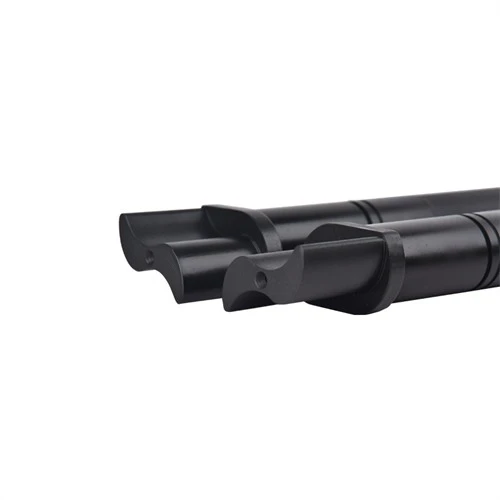
Let's take a closer look at the different types of S Cams for front and rear axles. You can find more info about Front Axle Brake Camshaft and Rear Axle Brake Camshaft on our website.
The front and rear axles of a semi - trailer have different functions and load - bearing requirements. The front axle is mainly responsible for steering, while the rear axle carries most of the load. This means that the S Cams for the front and rear axles might have different weights and designs.
For the front axle, a lighter S Cam can be beneficial. Since the front axle is involved in steering, a lighter S Cam reduces the unsprung weight and makes the steering more responsive. It also puts less stress on the front suspension, which can improve the overall handling of the trailer.
On the other hand, the rear axle S Cam needs to be strong enough to handle the high braking forces required to stop a heavily loaded trailer. However, it's still important to keep the weight in check. A too - heavy rear axle S Cam can cause problems with the trailer's balance and stability.

Finding the Right Balance
As a Semi Trailer S Cam supplier, I know how important it is to find the right balance between the weight of the S Cam and its performance. We use advanced materials and manufacturing techniques to produce S Cams that are both lightweight and strong.
For example, we might use high - strength alloys in the S Cam construction. These alloys can provide the necessary strength and durability while reducing the overall weight. By using lighter S Cams, we can help semi - trailer owners increase their load capacity without sacrificing safety or performance.
We also offer different types of S Cams, like the Front Brake Camshaft, to meet the specific needs of different trailers. Whether you have a small - scale semi - trailer or a large - capacity one, we have an S Cam solution for you.
The Impact on Fuel Efficiency
The weight of the S Cam can also have an impact on fuel efficiency. A heavier S Cam means more weight for the trailer to carry, which requires more fuel to move. This is especially important for long - haul trucking, where fuel costs can be a significant expense.
By using lighter S Cams, semi - trailer operators can reduce the overall weight of the trailer and improve fuel efficiency. This not only saves money on fuel but also reduces the environmental impact of the transportation industry.
Wrapping It Up
In conclusion, the weight of a Semi Trailer S Cam plays a significant role in the semi - trailer's load capacity. A heavier S Cam can increase the unsprung weight, put stress on the suspension and braking systems, and reduce fuel efficiency. On the other hand, a lighter S Cam can improve handling, braking performance, and fuel economy, allowing the trailer to carry more weight safely.
If you're in the market for high - quality, lightweight Semi Trailer S Cams, I'd love to have a chat with you. We can discuss your specific needs and find the best S Cam solution for your semi - trailer. Don't hesitate to reach out for more information or to start a procurement discussion.
References
- Automotive Braking Systems: Principles and Maintenance, Third Edition by Robert N. Brady
- Heavy - Duty Truck Systems by Frank DiGiorgio