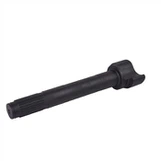
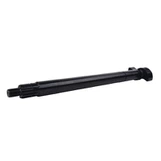
The rear brake camshaft is a critical component in a vehicle's braking system, playing a pivotal role in ensuring safe and efficient stopping power. As a leading rear brake camshaft supplier, we understand the importance of how this component operates under different driving conditions. In this blog, we'll delve into the mechanics of the rear brake camshaft and explore its functionality across various scenarios.
Understanding the Basics of a Rear Brake Camshaft
Before we discuss its operation in different driving conditions, let's first understand what a rear brake camshaft is and how it functions. The rear brake camshaft is a shaft with one or more cams that are designed to convert the rotational motion of the brake actuator into linear motion, which in turn applies force to the brake shoes or pads. When the driver presses the brake pedal, the brake actuator moves the camshaft, causing the cams to push against the brake shoes. This action forces the brake shoes against the brake drum, creating friction and slowing down the vehicle.
Operation in Normal Driving Conditions
In normal driving conditions, the rear brake camshaft operates smoothly and predictably. When the driver applies the brakes gently, the brake actuator sends a signal to the camshaft, which rotates slightly. The cams on the camshaft then push the brake shoes against the brake drum with a moderate force, gradually slowing down the vehicle. This process is repeated every time the brakes are applied, and the camshaft ensures that the braking force is evenly distributed across the rear wheels.
One of the key advantages of a well - designed rear brake camshaft is its ability to provide consistent braking performance. In normal driving, the camshaft's design allows for a smooth and progressive application of the brakes, which helps to prevent sudden stops and reduces wear on the brake components. Our Rear Axle Brake Camshaft is engineered to meet these requirements, ensuring reliable performance in everyday driving situations.


Operation in Heavy - Duty Driving Conditions
Heavy - duty vehicles, such as trucks and trailers, often operate under more demanding conditions. These vehicles carry large loads, which means that the braking system has to work harder to slow down or stop the vehicle. In heavy - duty driving conditions, the rear brake camshaft is subjected to higher forces and more frequent use.
When a heavy - duty vehicle is braking, the brake actuator has to generate a much larger force to rotate the camshaft. Our Heavy Truck Camshaft is specifically designed to handle these high - stress situations. It is made from high - strength materials that can withstand the increased forces and resist wear and tear. The cams on the camshaft are also designed to provide a greater mechanical advantage, allowing for a more powerful application of the brakes.
In addition, heavy - duty vehicles may need to make frequent stops, such as in city traffic or when making deliveries. The rear brake camshaft in these vehicles must be able to operate efficiently over long periods without overheating or losing its effectiveness. Our camshafts are engineered with advanced cooling features and precision - machined surfaces to ensure optimal performance even under the most challenging heavy - duty driving conditions.
Operation in Trailer Applications
Trailers are another area where the rear brake camshaft plays a crucial role. Trailers can vary in size and weight, and their braking systems need to be carefully calibrated to work in conjunction with the towing vehicle. The Trailer Axle Camshaft is designed to provide the right amount of braking force for the trailer's specific requirements.
When a trailer is being towed, the braking system of the towing vehicle and the trailer need to work in harmony. The rear brake camshaft in the trailer is connected to the trailer's brake actuator, which is often controlled by the towing vehicle's braking system. When the driver of the towing vehicle applies the brakes, the signal is sent to the trailer's brake actuator, which then rotates the camshaft. The camshaft then applies the brakes on the trailer's wheels, helping to slow down the entire combination.
In trailer applications, the camshaft must be able to adjust to different loads. A fully - loaded trailer will require more braking force than an empty one. Our trailer axle camshafts are designed with adjustable features that allow for easy calibration to ensure that the trailer brakes are applied correctly regardless of the load.
Operation in Adverse Weather Conditions
Adverse weather conditions, such as rain, snow, or ice, can significantly affect the performance of a vehicle's braking system. In wet conditions, the friction between the brake shoes and the brake drum is reduced, which means that the rear brake camshaft has to work harder to generate the same amount of braking force.
When it's raining, water can get between the brake shoes and the brake drum, creating a thin film that reduces friction. The camshaft has to rotate further to push the brake shoes against the drum with enough force to overcome this reduced friction. Our rear brake camshafts are designed with special coatings and surface treatments that help to repel water and maintain good contact between the brake shoes and the drum, even in wet conditions.
In snowy or icy conditions, the situation is even more challenging. The low - friction surface of the road means that the vehicle needs to stop more gradually to avoid skidding. The rear brake camshaft has to be able to provide a smooth and controlled application of the brakes. Our camshafts are engineered to work in harmony with anti - lock braking systems (ABS) to ensure that the vehicle can stop safely on slippery roads.
Importance of Regular Maintenance
Regardless of the driving conditions, regular maintenance of the rear brake camshaft is essential. Over time, the camshaft can wear out, and the cams can become damaged or misaligned. This can lead to uneven braking, reduced stopping power, and increased wear on other brake components.
Regular inspections should be carried out to check the condition of the camshaft. The camshaft should be lubricated regularly to ensure smooth operation. If any signs of wear or damage are detected, the camshaft should be replaced immediately. As a rear brake camshaft supplier, we offer high - quality replacement parts and can provide expert advice on maintenance and installation.
Conclusion
The rear brake camshaft is a vital component of a vehicle's braking system, and its operation varies depending on the driving conditions. Whether it's normal driving, heavy - duty use, trailer applications, or adverse weather conditions, the camshaft has to adapt to provide the right amount of braking force.
As a trusted rear brake camshaft supplier, we are committed to providing high - quality products that meet the diverse needs of our customers. Our Trailer Axle Camshaft, Heavy Truck Camshaft, and Rear Axle Brake Camshaft are designed with the latest technology and highest - quality materials to ensure reliable performance in all driving conditions.
If you are in the market for a rear brake camshaft or have any questions about our products, we encourage you to contact us for procurement and further discussions. Our team of experts is ready to assist you in finding the right solution for your specific needs.
References
- Automotive Brake Systems Handbook, McGraw - Hill
- Principles of Vehicle Dynamics, SAE International
- Brake System Design and Safety, Society of Automotive Engineers