Hey there! I'm a supplier of S CAM, and today I'm gonna break down how S CAM works. If you're in the business of heavy - duty vehicles, trailers, or just curious about the mechanics behind braking systems, this blog is for you.
Let's start with the basics. S CAM is a crucial component in many air - brake systems. It plays a vital role in converting the linear motion of the brake chamber's pushrod into the rotational motion needed to apply the brakes.
The Anatomy of S CAM
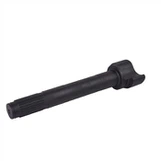
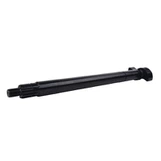
First off, the S CAM is shaped like the letter "S". This unique shape is not just for show; it's designed to perform a specific function. The S - shaped cam is mounted on a shaft that runs through the brake assembly. When the brake chamber gets pressurized air, the pushrod moves forward. This pushrod is connected to a slack adjuster, which is in turn connected to the S CAM shaft.
The S Camshaft [/brake - s - camshaft/s - camshaft.html] is usually made from high - strength steel. This is because it has to withstand a lot of stress and wear over its lifespan. The material is heat - treated to increase its hardness and resistance to deformation.
How the Braking Process Works
When you step on the brake pedal in a vehicle with an air - brake system, compressed air is sent to the brake chambers. The brake chamber is like a small piston - like device. As the air fills the chamber, it pushes the pushrod out.
The pushrod then transfers this linear force to the slack adjuster. The slack adjuster is a mechanical link that allows for adjustment of the brake's position as the brake linings wear down. It takes the linear motion from the pushrod and rotates the S CAM shaft.


As the S CAM rotates, its unique shape causes the brake shoes to be pushed outwards against the brake drum. The brake shoes have friction linings on them. When these linings come into contact with the rotating brake drum, they create friction. This friction is what slows down or stops the vehicle.
Let's dig a bit deeper into the role of the S CAM in this process. The S CAM's shape is designed to provide a progressive increase in the force applied to the brake shoes. As it rotates, the distance from the center of the shaft to the point where it contacts the brake shoes increases. This means that the force on the brake shoes also increases as the cam rotates further.
Advantages of S CAM in Braking Systems
One of the main advantages of using an S CAM in an air - brake system is its simplicity. Compared to some other braking mechanisms, the S CAM system is relatively easy to understand and maintain. Mechanics can easily access and adjust the S CAM and related components if needed.
Another advantage is its reliability. The S CAM design has been around for a long time and has proven to be very durable. It can handle heavy - duty use in trucks, buses, and trailers. Even in harsh conditions, the S CAM can continue to function effectively.
Applications of S CAM
S CAMs are widely used in commercial vehicles. Trucks, especially those used for hauling heavy loads, rely on S CAM air - brake systems. Trailers also commonly use S CAMs. The Trailer Axle Brake Camshaft [/brake - s - camshaft/trailer - axle - brake - camshaft.html] is an essential part of the trailer's braking setup.
In the transportation industry, the safety of the vehicles is of utmost importance. The S CAM system helps ensure that large vehicles can stop safely and quickly when needed. This is crucial for preventing accidents on the roads.
Maintenance and Inspection
To keep the S CAM system working properly, regular maintenance and inspection are necessary. Mechanics should check the S Camshaft [/brake - s - camshaft/s - camshaft - factory.html] for signs of wear, such as excessive scoring or deformation. The brake shoes and linings also need to be inspected for wear and replaced when they reach a certain thickness.
The slack adjuster should be checked to make sure it is adjusting correctly. If the slack adjuster is not working properly, it can lead to uneven braking or brakes that don't engage fully.
Potential Issues and Troubleshooting
Sometimes, the S CAM system can face issues. One common problem is camshaft wear. Over time, the constant rotation and the force applied to the S CAM can cause it to wear down. If the camshaft is worn, it may not apply enough force to the brake shoes, resulting in reduced braking performance.
Another issue can be related to the air - brake system itself. If there is a leak in the air lines or a problem with the brake chamber, the S CAM may not receive the proper amount of force to operate correctly.
To troubleshoot these issues, mechanics usually start by checking the air - brake system for leaks. They will also inspect the S CAM and related components for visible signs of damage. If the S CAM is worn, it may need to be replaced.
Why Choose Our S CAM Products
As a supplier of S CAMs, we take pride in offering high - quality products. Our S Camshafts are manufactured in state - of - the - art facilities using the latest technology. We use only the best materials to ensure durability and performance.
We understand the importance of safety in the transportation industry. That's why our products are rigorously tested to meet or exceed industry standards. Whether you're a trucking company, a trailer manufacturer, or a mechanic looking for reliable parts, our S CAMs are a great choice.
Let's Connect
If you're interested in learning more about our S CAM products or are looking to place an order, we'd love to hear from you. We're always ready to answer any questions you might have and discuss your specific needs. Whether you need a single S Camshaft for a repair or are looking to stock up for your business, we can help. Get in touch with us, and let's start a conversation about how our S CAMs can benefit your operations.
References
- Brake System Manuals from major commercial vehicle manufacturers
- Industry research papers on air - brake systems
So, that's how S CAM works! I hope this blog has given you a better understanding of this important component in the world of heavy - duty vehicle braking.