The camshaft lobe separation angle (LSA) is a critical specification in the design and performance of a truck engine. As a supplier of camshafts for trucks, understanding this concept is essential for providing the best products to our customers. In this blog, we'll delve into what the camshaft lobe separation angle is, its significance, and how it affects the overall performance of a truck engine.


What is the Camshaft Lobe Separation Angle?
The camshaft lobe separation angle is the angular distance between the centerlines of the intake and exhaust lobes on a camshaft, measured in degrees of crankshaft rotation. It represents the amount of overlap between the opening of the intake valve and the closing of the exhaust valve. A typical range for the LSA in truck engines can vary from 106 to 118 degrees, but this can differ depending on the specific engine design and its intended use.
To visualize this, imagine the camshaft as a rotating shaft with lobes that actuate the intake and exhaust valves. The intake lobe opens the intake valve to allow the air - fuel mixture into the combustion chamber, while the exhaust lobe opens the exhaust valve to expel the burned gases. The LSA determines how these two events are timed in relation to each other.
Significance of the Camshaft Lobe Separation Angle
1. Engine Performance
The LSA has a profound impact on the engine's power output, torque curve, and fuel efficiency. A narrower LSA (e.g., 106 - 112 degrees) generally results in more valve overlap. This increased overlap allows some of the exhaust gases to be re - introduced into the intake stream, which can enhance the scavenging effect. Scavenging is the process of removing the remaining exhaust gases from the combustion chamber and filling it with a fresh air - fuel mixture. As a result, a narrower LSA can improve high - RPM power, making it suitable for high - performance truck engines used in racing or heavy - hauling applications where maximum power at high speeds is required.
On the other hand, a wider LSA (e.g., 114 - 118 degrees) reduces the valve overlap. This is beneficial for low - and mid - RPM torque. With less overlap, there is less chance of exhaust gas re - entry into the intake, which can lead to a more stable idle and better low - end power. Trucks that operate in stop - and - go traffic or need to tow heavy loads at lower speeds often benefit from a wider LSA.
2. Emissions
The LSA also plays a role in emissions control. A well - designed LSA can help reduce harmful emissions such as nitrogen oxides (NOx) and hydrocarbons (HC). By optimizing the valve timing, the engine can achieve more complete combustion, which reduces the amount of unburned fuel and pollutants released into the atmosphere. For example, a wider LSA can help in reducing NOx emissions by lowering the peak combustion temperatures.
3. Idle Quality
Idle quality is another aspect affected by the LSA. A wider LSA typically results in a smoother idle because there is less valve overlap, which means less interference between the intake and exhaust processes. This is important for trucks that need to run quietly and smoothly when stationary, such as delivery trucks that make frequent stops.
How We, as a Camshaft Supplier, Utilize the LSA
As a supplier of camshafts for trucks, we take the LSA into careful consideration when designing and manufacturing our products. We understand that different truck applications require different camshaft profiles, and the LSA is a key factor in achieving the desired performance.
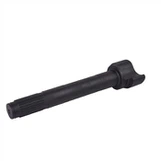
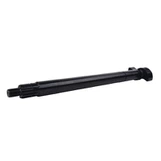
For customers who need high - performance camshafts for racing or heavy - duty hauling, we offer camshafts with a narrower LSA. These camshafts are designed to maximize power at high RPMs, providing the extra boost needed for demanding applications. Our S Camshaft is an example of a product that can be customized with a narrower LSA for enhanced performance.
On the other hand, for customers who prioritize low - end torque and smooth idle, such as those in the delivery or urban transportation sectors, we provide camshafts with a wider LSA. Our Front Axle Brake Camshaft and Trailer S Camshaft can be tailored to meet these requirements, ensuring optimal performance in stop - and - go situations.
Factors to Consider When Choosing the Right LSA
When customers are selecting a camshaft with the appropriate LSA for their truck engines, several factors should be taken into account:
1. Engine Application
The primary use of the truck is the most important factor. If the truck is used for long - distance hauling on highways at high speeds, a camshaft with a narrower LSA might be more suitable. However, if it is used for local deliveries or in mountainous areas with frequent stops and starts, a wider LSA would be a better choice.
2. Compression Ratio
The compression ratio of the engine also affects the choice of LSA. Engines with high compression ratios may require a different LSA compared to those with low compression ratios. A high - compression engine may benefit from a narrower LSA to take advantage of the increased scavenging effect, while a low - compression engine may need a wider LSA for better low - end performance.
3. Intake and Exhaust Systems
The design of the intake and exhaust systems can influence the effectiveness of the LSA. A well - designed intake system can enhance the scavenging effect, making a narrower LSA more effective. Similarly, an efficient exhaust system can help in expelling the exhaust gases more quickly, which can also impact the choice of LSA.
Customization and Support
We understand that every truck engine is unique, and our customers may have specific requirements. That's why we offer customization services for our camshafts. Our team of experienced engineers can work closely with customers to determine the optimal LSA based on their engine specifications and application needs.
Whether you need a camshaft for a small - displacement engine in a light - duty truck or a high - performance camshaft for a heavy - duty diesel engine, we have the expertise and resources to provide the right solution. We also offer technical support to our customers, helping them with installation, tuning, and maintenance of our camshafts.
Contact Us for Your Camshaft Needs
If you are in the market for a high - quality camshaft for your truck engine, we invite you to contact us. Our team is ready to discuss your requirements and provide you with the best camshaft solution. Whether you need a camshaft with a specific LSA for enhanced performance or a customized design for a unique application, we can help.
References
- Heywood, J. B. (1988). Internal Combustion Engine Fundamentals. McGraw - Hill.
- Taylor, C. F. (1985). The Internal Combustion Engine in Theory and Practice. MIT Press.